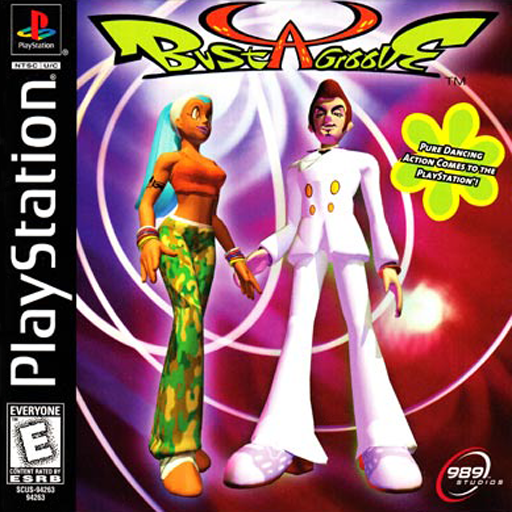
Bust a Groove
⚡ Help complete this entry
Click a link below to open a pre-filled GitHub issue. Attach the image, paste the title, or write the description — the receiver will ingest it into the data on the next build.
Media

Titles
| Text | Lang | Script | Region | Form | Source | Verified |
|---|---|---|---|---|---|---|
| バスト ア ムーブ | ja |
Kana |
jp | official | wikidata | unverified |
| Bust a Groove | en |
Latn |
us | official | wikidata | unverified |
| 버스트 어 무브 | ko |
Hang |
kr | official | wikidata | unverified |
| Bust a Groove | es |
Latn |
es | official | wikidata | unverified |
| Bust a Groove | fr |
Latn |
fr | official | wikidata | unverified |
| Bust a Groove | it |
Latn |
it | official | wikidata | unverified |
Description
source: wikidata1998 video game
source: wikipedia_enBust a Groove is a 1998 rhythm video game developed by Metro and published by Enix for the PlayStation. It was released by 989 Studios in North America and Sony Computer Entertainment in Europe. One of the first rhythm games to follow in the wake of PaRappa the Rapper's unexpected popularity, the game combined PaRappa the Rapper-inspired rhythm-based gameplay with elements of fighting games, including special moves designed to damage the opponent and head-to-head competitive play. The Japanese version is titled Bust a Move: Dance & Rhythm Action (バスト ア ムーブ Dance & Rhythm Action, Basuto A Mūbu Dance & Rhythm Action), but in all other regions it was released as Bust a Groove, to avoid a trademark conflict with the Japanese puzzle game Puzzle Bobble, which was released in North America and Europe as Bust-A-Move. The sequel, Bust a Groove 2, unlike its predecessor, was never planned to be released in Europe, and Dance Summit 2001, the third game in the series, was released only in Japan on the PlayStation 2.
source: wikipedia_ja『バスト ア ムーブ』(BUST A MOVE)は、メトロが開発し、エニックス(現スクウェア・エニックス)から発売された音楽ゲーム。1998年1月29日に第一作である「バスト ア ムーブ Dance&Rhythm Action」が、翌1999年4月15日に『バスト ア ムーブ2 ダンス天国MIX』が共にプレイステーションで発売された。また「スクウェア・エニックス ポケットアクション」(携帯電話)において同作のモバイル版が配信されている。 また、2000年11月2日にはシステムを一新した「ダンスサミット2001 バスト・ア・ムーブ」がプレイステーション2で発売された。
source: wikipedia_ko버스트 어 무브(Bust A Move: Dance & Rhythm Action/Bust A Groove) 또는 버스트 어 그루브는 1998년에 출시된 소니 플레이스테이션 (콘솔)용 리듬 게임이다. 이 게임은 메트로에서 개발하고 일본의 멀티미디어 출판사 에닉스에서 퍼블리싱했으며, 북미에서는 지금은 없어진 989 스튜디오(989 Studios)에서 퍼블리싱했다. 소니 인터랙티브 엔터테인먼트 유럽이 유럽에서 출판했다. 파라파 더 래퍼의 예상치 못한 인기에 이어 출시된 최초의 리듬 게임 중 하나인 이 게임은 파라파 더 래퍼에서 영감을 받은 리듬 기반 게임플레이와 상대에게 피해를 입히도록 고안된 필살기 및 정면 대결을 포함한 격투 게임의 요소를 결합했다. 일본어 버전의 제목은 버스트 어 무브(バスト ア ムーブ)이지만 다른 모든 지역에서는 버스트 어 무브로 북미와 유럽에 출시된 일본 퍼즐 게임 퍼즐 보블 (비디오 게임)과의 상표권 충돌을 피하기 위해 버스트 어 그루브(Bust A Groove)로 출시되었다. 속편인 버스트 어 무브 2(Bust A Groove 2)는 전작과 달리 유럽에서 출시될 계획이 없었으며, 시리즈의 세 번째 게임인 버스트 어 무브: 댄스 서밋 2001(Bust A Move: Dance Summit 2001)은 플레이스테이션 2를 통해 일본에서만 출시되었다.
source: wikidatajeu vidéo de 1998
source: wikipedia_frBust a Groove est un mélange entre un jeu de rythme et un jeu de combat développé par Metro Corporation et édité par Enix, désormais connu sous le nom de Square Enix. Il sort au Japon en 1998 sur PlayStation, est distribué par 989 Studios aux États-Unis et SCEE en Europe. Il est désormais disponible sur le PlayStation Store. Le jeu est plus connu au Japon sous le nom de Bust a Move: Dance & Rhythm Action (バスト ア ムーブ Dance & Rhythm Action Basuto a Mūbu Dance & Rhythm Action) mais il est renommé par 989 Studios Bust-a-Groove car une série de puzzle games japonaise, Puzzle Bobble était déjà connu sous le nom de Bust a Move en Amérique. Le jeu a eu une suite, Bust a Groove 2, qui ne fut jamais distribué en Europe. La série est actuellement terminée avec le jeu Dance Summit 2001: Bust a Groove, sur PlayStation 2, édité uniquement pour les japonais.
source: wikidatavideojuego de 1998
source: wikipedia_esBust-a-Groove es un videojuego musical y de lucha para la Sony PlayStation lanzado en 1998. El juego fue publicado en Japón por Enix (ahora Square Enix). El título original japonés era Bust A Move; pero fue cambiado en su lanzamiento en América, debido a que el juego Puzzle Bobble fue estrenado allí con ese nombre. El juego combina los bailes con unos ataques (llamados Jammers) con el cual puedes vencer a tu contrincante.
source: wikidataComputerspiel aus dem Jahr 1998
source: wikidatavideogioco del 1998
source: wikipedia_itBust a Groove, pubblicato originariamente in Giappone come Bust a Move: Dance & Rhythm Action (バスト ア ムーブ Dance & Rhythm Action?, Basuto a Mūbu Dance & Rhythm Action), è un videogioco musicale sviluppato da Metro Graphics e pubblicato nel 1998 da Enix per PlayStation. Il titolo originale del videogioco è stato modificato durante la localizzazione per evitare la confusione con Puzzle Bobble, distribuito negli Stati Uniti d'America e in Europa come Bust-a-Move. Il gioco ha ricevuto una conversione arcade distribuita da Atlus e Namco e due seguiti: Bust a Groove 2 (1999), mai commercializzato in Europa, e Dance Summit 2001 per PlayStation 2, pubblicato solo in Giappone.
source: wikidatajogo eletrônico de 1998
source: wikipedia_ptBust a Groove é um jogo de vídeo game híbrido de música e combate do PlayStation, lançado em 1998. O jogo foi publicado pela produtora japonesa Enix (agora Square Enix) no Japão e levado aos EUA pela, agora extinta, 989 Studios e pela SCEE à Europa. Ele está disponível para download na PlayStation Store europeia para o sistema PlayStation 3, com planos para o lançamento para PlayStation 3 Store dos Estados Unidos.[carece de fontes?] O jogo, no original japonês, foi intitulado Bust a Move: Dance & Rhythm Action (バスト ア ムーブ, Dance & Rhythm Action; Basuto a Mūbu Dance & Rhythm Action); nos EUA, tornou-se Bust a Groove porque a franquia de jogo de quebra-cabeça Puzzle Bobble já tinha utilizado o título de Bust-A-Move em sua versão americana. O jogo combinou a jogabilidade baseada em rítmo de PaRappa the Rapper com elementos de jogos de luta, incluindo ataques especiais para prejudicar o adversário e focar num jogo mais competitivo entre os jogadores. A sequência, o Bust A Groove 2, ao contrário de seu antecessor, nunca foi lançado na Europa. Um terceiro jogo da série, Dance Summit 2001, foi lançado para o PlayStation 2 somente no Japão.
source: wikidataкомпьютерная игра 1998 года
Metadata
| First release | 1998-01-29 |
|---|---|
| Category | main_game |
| Platform | PlayStation |
External IDs
wikidata | Q1421439 |
|---|---|
mobygames | 3840 |
igdb | 4138 |