« Game Boy Color

Ms. Pac-Man

Media

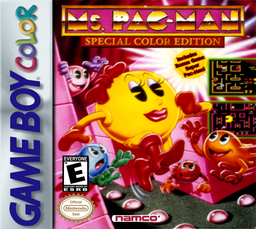
boxart (eu)
boxart (eu)
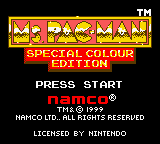
titlescreen (eu)
titlescreen (eu)
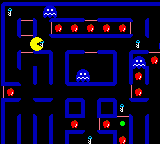
screenshot (eu)
screenshot (eu)

Titles

TextLangScriptRegionFormSourceVerified
ミズ・パックマン ja Kana jp official wikidata unverified
Ms. Pac-Man en Latn us official wikidata unverified
미스 팩맨 ko Hang kr official wikidata unverified
吃豆小精灵 zh Hans cn official wikidata unverified
小精靈小姐 zh Hant tw official wikidata unverified
Ms. Pac-Man es Latn es official wikidata unverified
Ms. Pac-Man fr Latn fr official wikidata unverified
Ms. Pac-Man de Latn de official wikidata unverified
Ms. Pac-Man it Latn it official wikidata unverified

Description

source: wikidata1982 video game

source: wikipedia_enMs. Pac-Man is a 1982 maze video game developed by General Computer Corporation (GCC) and published by Midway Manufacturing for arcades. It is a sequel to Pac-Man (1980), and the first entry in the series to not be made by Namco. Controlling the title character, Pac-Man's wife, the player is tasked with eating all of the pellets in an enclosed maze while avoiding four colored ghosts. Eating the larger "power pellets" lets the player eat the ghosts, which turn blue and flee. General Computer made the game as a modification kit for the original Pac-Man, titled Crazy Otto. However, due to previous legal action with Atari, Inc., GCC was forced to present the project to Midway Manufacturing, the North American distributor of Pac-Man. Midway purchased the project and enlisted GCC to use the game as a basis for the sequel to Pac-Man. Multiple names were considered for the game, including Miss Pac-Man and Mrs. Pac-Man, before the final name Ms. Pac-Man was chosen for being easier to pronounce. While development had started without Namco's consent, company president Masaya Nakamura was brought in and provided feedback on the player character's design. Namco ultimately collected the same roy
source: wikipedia_ja『ミズ・パックマン』(英語: Ms. Pac-Man) は、1981年にバリー=ミッドウェイよりアメリカで発売されたアーケードゲーム。当初は『パックマン』のクローンゲームとしてリリースされた。のちにナムコ(後のバンダイナムコエンターテインメント)の公認を受け、日本でもナムコミュージアム等に収録されたほか、ダウンロード販売もされた時期もあった。

source: wikipedia_ko《미스 팩맨》(Ms. Pac-Man)은 비디오 아케이드 게임의 황금기에 출시된 아케이드 비디오 게임이다. 《팩맨》의 북아메리카 배급사로서 일리노이주에 위치한 미드웨이 매누팩처링사가 개발하였다. 《미스 팩맨》은 1982년 1월 북아메리카에 출시되었으며 가장 대중적인 아케이드 비디오 게임들 가운데 하나이다. 이러한 인기는 1980년 말 미국에 출시된 《팩맨》의 제작사 남코의 공식 타이틀로의 채택으로 이어졌다. 《미스 팩맨》은 여성 주인공, 새로운 미로 설계, 또 오리지널 《팩맨》에 비해 기타 여러 개선된 게임플레이 변화를 도입하였다. 《미스 팩맨》은 115,000개의 아케이드 캐비닛을 판매하면서 미국에서 개발된 가장 성공적인 아케이드 게임이 되었다.

source: wikipedia_zh《吃豆人小姐》(英语:Ms. Pac-Man)是通用電腦公司開發及推出的街機遊戲,在1982年1月於北美推出。該遊戲是1980年的《吃豆人》的續作,也是系列作品裡第一個不是由南夢宮製作的。該遊戲是電子遊戲歷史上第一個由女性擔任主角的作品。 《InfoWorld》提到Atarisoft在Commodore 64上的《吃豆人小姐》 是雅达利8位机上销量最佳的游戏。

source: wikidatajeu vidéo de 1982

source: wikipedia_frMs. Pac-Man est un jeu vidéo créé par des hackers du MIT après avoir fondé la société General Computer, licencié par la société américaine Midway Manufacturing Company, sorti en 1981 sur borne d'arcade.

source: wikidatavideojuego de 1982

source: wikipedia_esMs. Pac-Man (ミズ・パックマン, Mizu Pakku Man?) es un videojuego arcade de laberintos de 1982 desarrollado por General Computer Corporation y publicado por Midway. Es una secuela derivada de Pac-Man (1980) y la primera entrega de la serie que no fue creada por Namco. Controlando al personaje principal, la esposa de Pac-Man, el jugador tiene la tarea de comer todas las bolitas en un laberinto cerrado mientras evita cuatro fantasmas de colores. Comer las "bolitas de poder" más grandes le permite al jugador comerse a los fantasmas, que se vuelven azules y huyen. General Computer creó el videojuego como un kit de modificación para el Pac-Man original, titulado Crazy Otto. Sin embargo, debido a acciones legales previas con Atari, Inc., GCC se vio obligada a presentar el proyecto a Midway, el distribuidor norteamericano de Pac-Man. Midway compró el proyecto y reclutó a GCC para usar el videojuego como base para la secuela de Pac-Man. Se consideraron varios nombres para el videojuego, incluidos Miss Pac-Man y Mrs. Pac-Man, antes de elegir el nombre final por ser más fácil de pronunciar. Si bien el desarrollo comenzó sin el consentimiento de Namco, el presidente de la empresa, Masaya Nakamura, int

source: wikidataComputerspiel aus dem Jahr 1982

source: wikipedia_deMs. Pac-Man ist ein Arcade-Spiel aus dem Jahre 1982, das als eines der Nachfolger von Pac-Man veröffentlicht wurde. Es wurde von der US-amerikanischen Firma Midway Manufacturing produziert. Ms. Pac-Man wurde in Nordamerika im Januar 1982 veröffentlicht und gehört dort zu den bisher erfolgreichsten Arcade-Videospielen. In Ms. Pac-Man steuert der Spieler eine weibliche Spielfigur, die Labyrinthe des Spiels waren komplexer als beim Vorgänger Pac-Man und es gab etliche Verbesserungen gegenüber dem Original-Titel.

source: wikidatavideogioco del 1982

source: wikipedia_itMs. Pac-Man (ミズ・パックマン?, Mizu Pakkuman) è un videogioco arcade del 1981 pubblicato da Midway Games. Secondo titolo della serie Pac-Man, è stato convertito per numerosi home computer e console, oltre a essere incluso in diverse raccolte di giochi tra cui Namco Museum. Il titolo, non realizzato ufficialmente da Namco, introduce il personaggio di Ms. Pac-Man. Ms. Pac-Man è considerato uno dei più popolari cabinati degli anni 1980, in particolare in America settentrionale.

source: wikidatavideojogo de 1982

source: wikipedia_ptPac-Man é uma série de jogos eletrônicos criada pelo designer japonês Tōru Iwatani e feita pelo estúdio de Tóquio, Japão, da Namco, atual Bandai Namco Entertainment. O objetivo da maioria dos jogos da série é percorrer um labirinto, comendo pontos, pontos energizantes e frutas e fugindo de quatro fantasmas, chamados Blinky (ciano), Pinky (rosa), Inky (vermelho) e Clyde (laranja). Alguns jogos da série inclui um gênero diferente dos outros jogos, como plataforma, corrida, party e outros.

source: wikidataкомпьютерная игра 1982 года

source: wikipedia_ruMs. Pac-Man — аркадная игра, выпущенная компанией Midway Manufacturing (штат Иллинойс). Выпущена в Северной Америке в 1982 году, на год позже Pac-Man, и стала одной из самых популярных компьютерных игр всех времён, что привело к тому, что компания Namco (владелец прав на Pac-Man) признала её частью официальной линейки. Главный герой игры был женского пола, присутствовали также изменения в дизайне лабиринтов и другие отклонения от оригинала. Игра стала самой успешной аркадной игрой, производимой в США: было продано 115 тысяч игровых автоматов.

Metadata

First release1982-01-13
Categorymain_game
PlatformGame Boy Color

External IDs

wikidataQ2141683
mobygames576
igdb49834

ROMs (1)

Show No-Intro ROM metadata
NameRegionSerialSizeHashes
Ms. Pac-Man - Special Colour Edition (Europe) (SGB Enhanced) (GB Compatible) eu 1048576 B crc32: f2335da9
md5: a57d5976214d5f8d…
sha1: d0f831165dc9a24e…

Raw JSON

/api/v1/games/gbc/ms-pac-man.json