source: wikidata1987 video game
source: wikipedia_enIn Greek mythology, the Labyrinth (Ancient Greek: λαβύρινθος, romanized: Labúrinthos) is an elaborate, confusing structure designed and built by the mythological artificer Daedalus for King Minos of Crete at Knossos. Its function was to hold the Minotaur, the monster eventually killed by the hero Theseus. Daedalus had so cunningly made the Labyrinth that he could barely escape it after he built it.
Although early Cretan coins occasionally exhibit branching (multicursal) patterns, the single-path (unicursal) seven-course "Classical" design without branching or dead ends became associated with the Labyrinth on coins as early as 430 BC, and similar non-branching patterns became widely used as visual representations of the Labyrinth – even though both logic and literary descriptions make it clear that the Minotaur was trapped in a complex branching maze. Even as the designs became more elaborate, visual depictions of the mythological Labyrinth from the Roman era until the Renaissance are almost invariably unicursal. Branching mazes were reintroduced only when hedge mazes became popular during the Renaissance.
In English, the term labyrinth is generally synonymous with maze. As a result
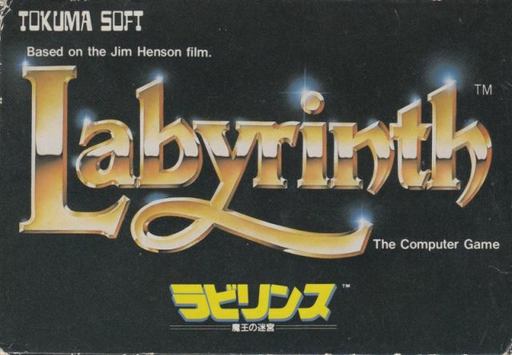
source: romuラビリンスは「ガントレット」に似た迷路ゲームですが、より明確な目標といくつかの冒険要素があります。このゲームは同名のジム・ヘンソンの映画に基づいており、映画の多くのシーンが迷路のエリアとして組み込まれています。
ゲームの目標は、サラが誘拐された弟をゴブリンの王ジャレスから買い戻すために使うことができる12枚のコインを集めることです。中央の城を囲む12の迷路のそれぞれに1枚のコインがあります。最初はアクセスできる迷路は限られていますが、各地域に1つずつある壊れた鍵の一部を集めると、サラは新しいエリアを開放してくれる友好的なゴブリンがいるハブに送られます。迷路の各セクションには独自のギミックがあり、例えばヘッジ迷路はプレイヤーが歩き回ると自ら形を変え、ファイリーの森はテレポートで満ちています。また、エリアは大きな地下迷路でつながっています。すべての鍵のセクションを集めると、サラは城の扉を開けて最終的な迷路のシリーズに入ることができますが、すべてのコインを集めていなければ勝利することはできません。
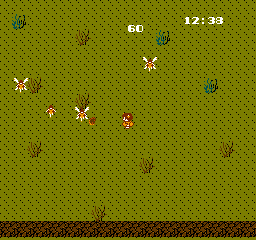
この間、サラは常に敵に襲われ、絶え間ない石を投げて敵を撃退しなければなりません。彼女の石は最終的にアップグレード可能で、映画の友人たちの好意を得ることで、彼らがサラの周りをついてきて、攻撃者に対して一緒に戦ってくれるようになります。
これらすべてを13分以内に行わなければならず、敵がサラを攻撃するたびに数秒を失います。しかし、時間を増やす方法はいくつかあり、ゲームに勝つためには迷路を解決することと、時間を探すことのバランスを取ることが重要です。