« Famicom / NES

Joust

⚡ Help complete this entry

Click a link below to open a pre-filled GitHub issue. Attach the image, paste the title, or write the description — the receiver will ingest it into the data on the next build.

Media

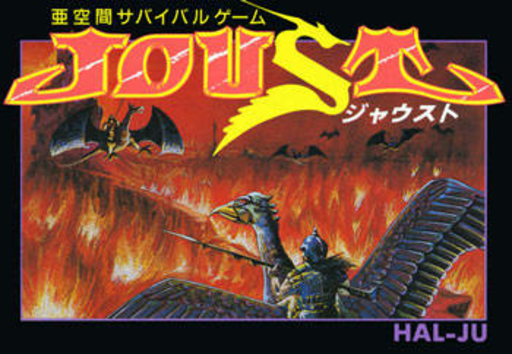
boxart (jp)
boxart (jp)
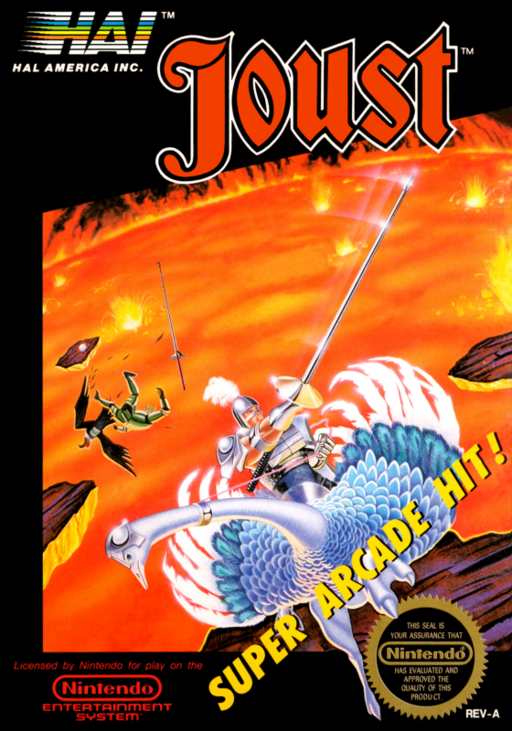
boxart (us)
boxart (us)
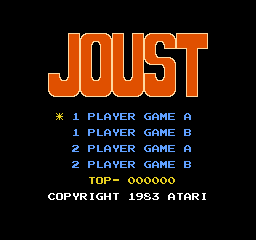
titlescreen (jp)
titlescreen (jp)
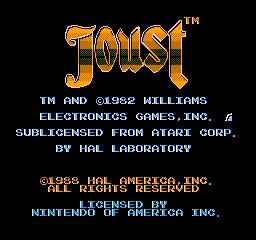
titlescreen (us)
titlescreen (us)
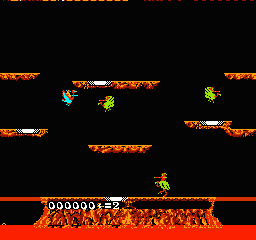
screenshot (jp)
screenshot (jp)
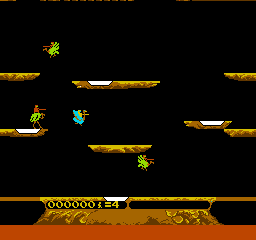
screenshot (us)
screenshot (us)

Titles

TextLangScriptRegionFormSourceVerified
ジャウスト ja Kana jp official wikidata ✓ verified
Joust en Latn us official wikidata unverified
자우스트 ko Hang kr official wikidata unverified
Joust es Latn es official wikidata unverified
Joust fr Latn fr official wikidata unverified
Joust de Latn de official wikidata unverified
Joust it Latn it official wikidata unverified

Description

source: wikidata1982 video game

source: wikipedia_enJoust is a 1982 action game developed and published by Williams Electronics for arcades. While not the first two-player cooperative video game, Joust's success and polished implementation popularized the concept. Players assume the role of knights armed with lances and mounted on large birds (an ostrich for Player 1 and a stork for Player 2), who must defeat enemy knights riding buzzards. The characters fly around a single screen filled with floating platforms. Using the computer hardware from the company's earlier arcade game, Defender, John Newcomer led the development team: Bill Pfutzenreuter, Janice Woldenberg-Miller (née Hendricks), Python Anghelo, Tim Murphy, and John Kotlarik. Newcomer aimed to create a flying game, with cooperative two-player gameplay, while avoiding the overdone space theme. After deciding to use birds as characters, he forwent the standard eight-direction joystick control scheme and devised collisions as the means of combat. The game was well-received by players and critics, and the mechanics influenced other games. It was followed by a more complex and less popular arcade sequel in 1986: Joust 2: Survival of the Fittest. Joust was ported to numerous home

source: wikipedia_ja『ジャウスト』 (Joust) は、ウィリアムズ・エレクトロニクスによって開発され、1982年に稼働したアーケードゲーム。2人のプレイヤーが協力するゲームプレイの概念を、それ以前の同様のゲームよりも成功したことで広めた。プレイヤーはボタンとジョイスティックを使って、ダチョウに乗った騎士を操作する。目的は、ノスリに乗っている敵の騎士のウェーブを打ち破ってレベルを上げることである。 開発チームはジョン・ニューカマーが率い、ビル・プフツェンロイター(Bill Pfutzenreuter)、ジャニス・ウォルデンバーグ=ミラー(Janice Woldenberg-Miller, 旧姓:ヘンドリクス(Hendricks))、パイソン・アンゲロ、ティム・マーフィ(Tim Murphy)、ジョン・コトラリク(John Kotlarik)らが参加した。ニューカマーは、人気だった宇宙というテーマを避けながら、2人用協力プレイで空飛ぶゲームを開発することを目指した。 このゲームは、アーケードで批評家から好評を博し、他の開発者に影響を与えたゲームプレイやシステムを称賛された。本作は多数の家庭用・携帯型プラットフォームに移植され、4年後には続編が登場した。
source: wikipedia_ko자우스트(Joust)는 1982년 아케이드로 출시된, 윌리엄스 일렉트로닉스가 개발한 액션 게임이다. 최초의 2인용 협업 비디오 게임은 아니었지만 자우스트의 성공과 정제된 구현은 이 개념을 보급시켰다. 플레이어 1은 타조를 타며 플레이어 2는 황새를 탄다. 플랩 버튼을 반복적으로 누르면 고도가 상승하고 2방향 조이스틱은 방향을 제어한다. 이 게임은 플레이어들과 평론가들로부터 좋은 평가를 받았으며 메커닉스는 다른 게임들에 영향을 줄었다. 자우스트는 수많은 홈 시스템에 이식되었으며 1986년 후속작 자우스트 2으로 이어졌다.

source: wikidata1982年电子游戏

source: wikipedia_zh《鸵鸟骑士》(英语:Joust,中国大陆和香港译作“鸵鸟骑士”,台湾译作“致命攻擊”)是由威廉斯電子開發並發行於1982年的街機遊戲。雖然不是第一款具有雙人合作遊戲的遊戲,但《鴕鳥騎士》比其前版遊戲更為成功,並推廣了這一概念。玩家使用按鈕和操縱桿來控制騎著鴕鳥的騎士。目標是通過擊敗騎乘禿鷹的敵方騎士團隊來進行各級攻擊。 約翰·紐康姆領導的開發團隊的目標是創造一個合作雙人遊戲的飛行遊戲,但是想要避免當時很受歡迎的太空主題,於是製作了這遊戲。 這個遊戲在商場和評論界廣受好評,他們稱讚遊戲玩法,其中的機制影響了其他開發人員的頭銜。《鴕鳥騎士》在四年後續集續作,並被移植到眾多家庭和便攜式平台上。街機續集《鸵鸟骑士2:适者生存》於1986年發布,它具有與垂直屏幕上新元素類似的遊戲玩法。

source: wikidatajeu vidéo de 1982

source: wikipedia_frJoust est un jeu vidéo créé par la société américaine Williams Electronics, sorti en 1982 sur borne d'arcade. Joust est un classique du jeu d'arcade. C'est un jeu d'action qui met en scène des joutes à dos d'oiseau dans un univers médiéval fantaisiste. Il introduit un mode deux joueurs jouable à la fois en coopération et en compétition. Il a été adapté sur de nombreuses systèmes familiaux, et a eu une suite, Joust 2: Survival of the Fittest, en 1986.

source: wikidatavideojuego de 1982

source: wikipedia_esJoust es un videojuego de arcade desarrollado por Williams Electronics y lanzado en 1982. Si bien no es el primer juego que presenta juegos cooperativos para dos jugadores, Joust tuvo más éxito que sus predecesores y popularizó el concepto. El jugador usa un botón y un joystick para controlar a un caballero que monta un avestruz volador. El objetivo es progresar a través de los niveles derrotando a grupos de caballeros enemigos que montan buitres. John Newcomer dirigió el equipo de desarrollo de Williams Electronics, que incluyó a Bill Pfutzenreuter, Janice Woldenberg-Miller (antiguo apellido: Hendricks), Python Anghelo, Tim Murphy y John Kotlarik. Newcomer se propuso crear un juego volador con un juego cooperativo para dos jugadores, pero quería evitar un tema espacial, que era popular en ese momento. El juego fue bien recibido en las salas de juego y por los críticos, que elogiaron la jugabilidad, cuya mecánica influyó en los títulos de otros desarrolladores. A Joust le siguió una secuela cuatro años después, y fue trasladada a numerosas plataformas domésticas y portátiles.

source: wikidataComputerspiel aus dem Jahr 1982

source: wikidatavideogioco arcade pubblicato nel 1982

source: wikipedia_itJoust ("giostra" in inglese) è un videogioco arcade sviluppato dalla Williams Electronics e pubblicato nel 1982. È un videogioco a piattaforme con grafica bidimensionale (2D). Il giocatore usa un pulsante e un joystick per controllare un cavaliere in sella a un uccello simile a uno struzzo in grado di volare. L'obiettivo è procedere attraverso differenti livelli sconfiggendo i cavalieri nemici che cavalcano delle poiane. Il team di sviluppo era guidato da John Newcomer e comprendeva Bill Pfutzenrueter, Jan Hendricks, Python Anghelo, Tim Murphy, e John Kotlarik. Newcome voleva creare un gioco basato sul volo con la possibilità di avere due giocatori che cooperassero, ma voleva evitare il tema spaziale che era molto diffuso all'epoca. Il gioco venne apprezzato per il suo gameplay e la meccanica di gioco ha influenzato videogiochi successivi, ad esempio Balloon Fight, creando un filone di varianti e imitazioni. Joust ha avuto un seguito tre anni dopo, Joust 2: Survival of the Fittest, ed è stato convertito su diverse piattaforme di gioco (da quelle domestiche a quelle portatili). La Williams realizzò anche un flipper con il tema di Joust.

source: wikidatavideojogo de 1982

source: wikipedia_ptJoust é um jogo de Video-game da Atari movido para Arcade, PC e Nintendo Entertainment System, desenvolvido por Williams Electronics. Joust foi desenvolvido pela Williams Electronics, com John Newcomer como o designer-chefe, e também o programador Bill Pfutzenrueter e os artistas Jan Hendricks e Python Anghelo ajudando-o. Tim Murphy e John Kotlarik lidaram com o design de áudio. O jogo apresenta um som mono amplificado, e gráficos raster em um monitor colorido CRT de 19 polegadas. Como outros jogos de arcade de Williams, Joust foi programado em linguagem assembly. Um pacote com três pilhas AA fornecem energia para salvar as configurações do jogo e pontuações altas quando a máquina está desconectada de uma tomada elétrica. A arte de gabinete, feita por Anghelo, está estampada em uma moldura de madeira. Anghelo também projetou materiais promocionais: um inseto como destaque, em Inglês arcaico, que também foi incorporado nas instruções do jogo na tela.

source: wikidataкомпьютерная игра 1982 года

source: wikipedia_ruJoust — аркадная игра, созданная компанией Williams Electronics в 1982 году.

Metadata

First release1982-07-16
Categorymain_game
PlatformFamicom / NES

External IDs

wikidataQ1567550
mobygames4059
igdb278132

ROMs (2)

Show No-Intro ROM metadata
NameRegionSerialSizeHashes
Joust (Japan) (En) jp 24592 B crc32: 55ba0b76
md5: 3277be6bf20087e2…
sha1: 3f58d5a3967dd5f1…
sha256: 10251fdeafa409d0…
Joust (USA) us 32784 B crc32: 161b88b0
md5: 91e202a7560e18cb…
sha1: 050eabcd02ea9e5a…
sha256: 9c47a4797cdf3e46…

Raw JSON

/api/v1/games/fc/joust.json