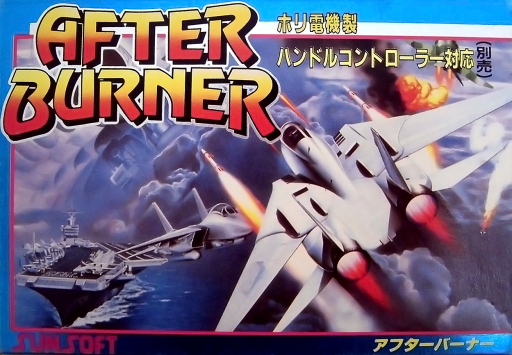
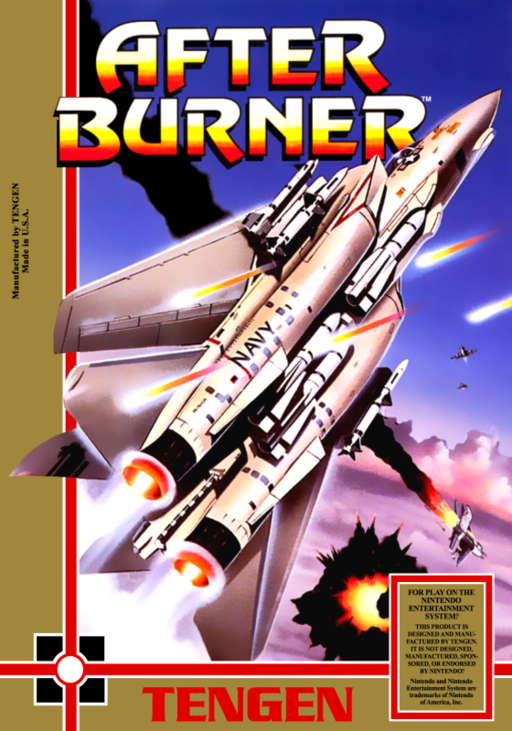
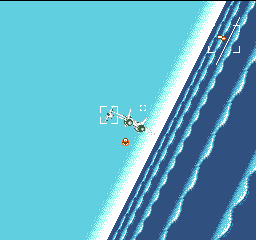
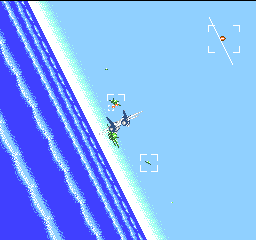
source: wikipedia_enAfter Burner is a 1987 rail shooter video game developed by Studio 128 and published by Sega for arcades. The player controls an American F-14 Tomcat fighter jet and must clear each of the game's 18 stages by destroying enemies. The plane is equipped with a machine gun and a limited supply of heat-seeking missiles. The game uses a third-person perspective, as in Sega's earlier Space Harrier (1985) and Out Run (1986). It runs on the Sega X Board arcade system which is capable of surface and sprite rotation. It is the fourth Sega game to use a hydraulic "taikan" motion simulator arcade cabinet, one that is more elaborate than their earlier "taikan" simulator games. The cabinet simulates an aircraft cockpit, with flight stick controls, a chair with seatbelt, and hydraulic motion technology that moves, tilts, rolls and rotates the cockpit in sync with the on-screen action.
Designed by Sega veteran Yu Suzuki, After Burner was intended to be Sega's first "true blockbuster" video game. Development began in December 1986, shortly after the completion of Out Run, and was kept as a closely guarded secret within the company. Suzuki was inspired by the 1986 films Top Gun and Laputa: Castle in